

603 Legal Aid has secured funding to develop and launch a Community Justice Worker (CJW) pilot program in Coös County, an area identified as a legal desert in New Hampshire. The CJW model will train members of the community to provide specific limited legal assistance under the supervision of a legal aid attorney.
In August 2026, 603 Legal Aid convened the first of several planned information sessions, inviting key stakeholders in Coös County to join the CJW Planning Committee that will help shape the program.
“Community Justice Workers can help bridge the gap between the legal system and the people who need help navigating it,” said Ev Norsworthy, Staff Attorney at 603 Legal Aid. “They understand the people, organizations, and challenges in their communities, and can help connect people with legal information and assistance in places they already know and trust.”
603 Legal Aid plans to develop a self-paced curriculum that will prepare selected community members to provide limited legal assistance related to public benefits, such as SNAP, WIC, FANF, and Medicaid. These individuals could include community health workers, social workers, librarians, crisis center advocates, volunteers at area shelters and food pantries, and others working in community-based organizations.
“We chose public benefits as the focus for this pilot because these programs affect so many aspects of people’s lives, from putting food on the table and accessing health care to keeping a family financially stable,” said Ariel Clemmer, Executive Director at 603 Legal Aid. “Navigating these systems can be complicated, and keeping up with changing requirements is a challenge. We see an enormous opportunity to bring legal information and assistance directly to the places where people already receive services.”
Using data from the 2025 New Hampshire Legal Needs Study, 603 Legal Aid identified Coös County, New Hampshire’s northernmost county, as the right location for the pilot.
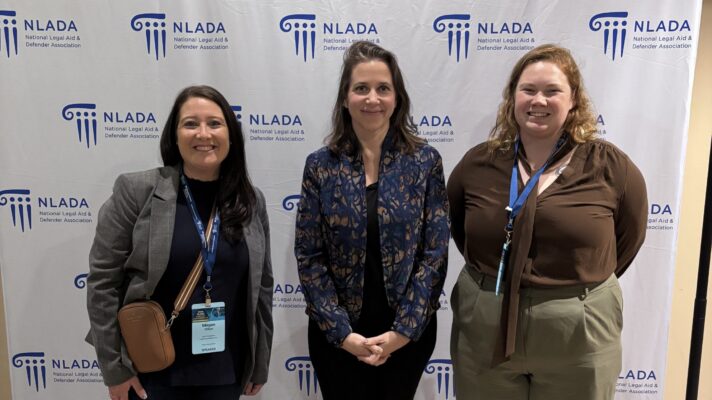
“There are just eight practicing attorneys physically based in the entire county of Coös,” said Clemmer, who led the Study’s project team. “That is what we mean when we talk about legal deserts. We need to think differently about how we connect people with legal help, in ways that work for the communities where they live.”
A grant from the Neil & Louise Tillotson Fund supports the planning phase of the program, while additional funding from a New Hampshire Bar Foundation Justice Grant and a Legal Services Corporation Pro Bono Innovation Fund grant will support the program through its design and implementation phases.
“We are incredibly grateful to the Neil & Louise Tillotson Fund, New Hampshire Bar Foundation, and the Legal Services Corporation for investing in this work,” said Clemmer. “Their support gives us the opportunity to build and test a model rooted in the needs of Coös County, with the potential to expand access to justice across New Hampshire.”
Once the planning committee is established, the group will conduct a needs assessment, develop a recruitment strategy, and hold community input sessions to better understand the legal needs and barriers facing people seeking public benefits in Coös County. From there, the curriculum will be finalized, with training for selected CJWs expected to begin by mid-2027.
“We are intentionally taking the time to do this right,” said Clemmer. “This is a new model for New Hampshire, and we want it to be shaped by the people and communities it is designed to serve. If we can build something that works in the North Country, with its unique geography and access-to-justice challenges, we believe it could teach us a great deal about how to expand this innovative approach to legal assistance throughout New Hampshire.”
603 Legal Aid’s CJW pilot is part of a broader effort to make legal help more accessible statewide. With support from the legal community, including the New Hampshire Supreme Court’s Access to Justice Commission, 603 Legal Aid is pioneering this service model in the North Country. “The Access to Justice Commission is pleased to support the Community Justice Worker initiative,” said Commission Co-Chair Anne Edwards, a Superior Court Justice. “The pilot program fits well within the goals of the Commission to expand opportunities for NH’s citizens to receive necessary legal information and assistance when and where they need it, especially in underserved rural areas.”
“Access to justice should not depend on where someone lives,” said Jack Crisp, Chair of the New Hampshire Bar Foundation. “Based upon my own experience as someone who lived and practiced in Coös County for fourteen years, for residents of rural communities like Coös County, obtaining legal assistance can present significant challenges. This innovative program represents an important step toward addressing those barriers by bringing legal support closer to the people who need it. The Foundation is proud to partner with 603 Legal Aid in supporting this promising initiative.”
The pilot is also drawing national attention. Frontline Justice, an organization with experience advancing community justice worker models, has been supportive of 603 Legal Aid’s efforts and recognized the program’s potential to greatly expand access to justice across the state. Frontline
Justice’s CEO Nikole Nelson recently observed, “The justice worker model has the potential to scale in ways that nothing else had that I saw in 25 years in legal aid.” 603 Legal Aid is one of 15 states working with Frontline Justice as part of a national CJW movement.
“We see this pilot as just the beginning,” said Clemmer. “Our long-term goal is to bring legal information and assistance closer to the people who need it and to develop new ways for people to get help before a legal problem becomes a crisis. Where you live or what you earn should not determine whether you can access the legal help you need and deserve.”
If you are interested in being part of the conversation or would like to be considered for a Community Justice Worker position in the pilot program, please reach out via email at .